


The artist has given the entirety of his twenty-five thousand pound award winnings to the MVT, which works to preserve the United Kingdom's grassroots concert spaces.
He was awarded the cheque on October 16 as his new release the album was named the top album of the previous year.
The musician has opted to hand the money over to the Music Venues Trust, in acknowledgment of the vital role grassroots venues fulfilled in his early career.
"As an artist would not have achieved this success if it wasn't for all the performances I played around the area, and beyond, when I was starting out," stated the artist. "These venues are renowned, but they are struggling."
Beginning in 2023, over 150 of these spaces have permanently closed – about one-sixth of the whole industry in the UK.
Recently, top acts such as Pulp, the group Coldplay, the singer Katy Perry and Ed Sheeran have all aided the trust in its attempts to help venues survive, by including a modest fee to their ticket costs, which supports smaller concert halls.
Fender also participated, collecting more than £100,000 on his recent tour to assist numerous grassroots venues across England, Scotland, and Wales.
The donation supported locations that were facing potential shutdown due to difficulties arising from flooding, fire incidents and family tragedies, as well as licensing issues, court cases and noise complaints.
Some locations were granted funding support in upgrading facilities and sound and lighting systems that helped performers and concertgoers.
"The concept that funds from performances in big venues supports the independent spots, where it begins for musicians like me, is just sensible," the star has said.
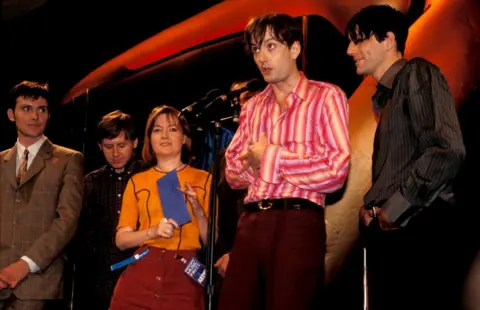
Fender is not the first artist to contribute his Mercury Prize funds to good deeds.
When Pulp received the trophy in 1996 for their album their work, vocalist Jarvis Cocker announced that the group would give their cash to the charity War Child.
In 2002, rapper and singer Ms Dynamite split her prize across several charities, including the NSPCC and a Sickle Cell charity.
"And I donated a £1,000 to my local community centre, to their classes, because I practiced gymnastics when I was a child and they needed new equipment," the artist shared with outlets.
In recent years, they donated their prize money to the youth organization that developed their band, alongside other independent music bodies.
Also the 1994 recipients they contributed their winnings to a multiple sclerosis charity after a friend was diagnosed the condition.
"Winning was quite enough," remarked singer Heather Small. "The cash was the extra but we didn't need the cherry, because we had the honor. So our success touched the lives of others."
In the past week, the trust shared it had saved several small stages in the South East, by bringing them into local control.
One venue in the city and the other in that location were bought under the Own Our Venues initiative, which is funded by a national body and music fans who acquire "ownership units" in the buildings.

